Italian oil conquers Japan, and quality comes from training
The recent boom in European extra virgin olive oil (EVO) in Japan is no coincidence. According to a 2025 report, EVO oil exports to Japan increased by 56% in one year, reaching almost £130 million.
This trend signals more than just commercial interest: there is a growing Japanese demand for quality, biodiversity and authenticity — values that ‘Made in Europe’ EVO oil is able to offer.
Let’s imagine a project like Enjoyevoo (Ecceasia), promoted by Unaprol, the Italian Olive Consortium and CAP-Confederação dos Agricultores de Portugal, with the support of the EU, designed for the Asian market. This project combines sensory education, taste culture and the promotion of Italy’s olive-growing heritage, playing a central role in spreading knowledge about EVO oil.
The main objective of Enjoyevoo is to convey information about cultivars, production regions and the sensory characteristics of certified oils (PDO, PGI, organic), so as to make consumers more aware, demanding and able to appreciate the nuances.
The programme’s activities, such as masterclasses with advanced hotel management schools and tastings during promotions in shops and restaurants, are concrete examples of this approach. In these sessions, buyers, importers, restaurateurs and distributors are guided in the discovery of oils from different Italian regions, with unique aromatic and taste profiles, showcasing the extraordinary biodiversity of European olive growing.
But how do you taste an EVO oil? Here is a practical guide.
How to taste extra virgin olive oil: a sensory experience
Tasting extra virgin olive oil is not just a technical gesture: it is a real sensory ritual that allows you to appreciate the quality, territory and history contained in each bottle. In Japan, where guided tastings of sake, tea, whisky or coffee are a widespread experience, the approach to EVO oil can be just as fascinating.
- Choose the right glass
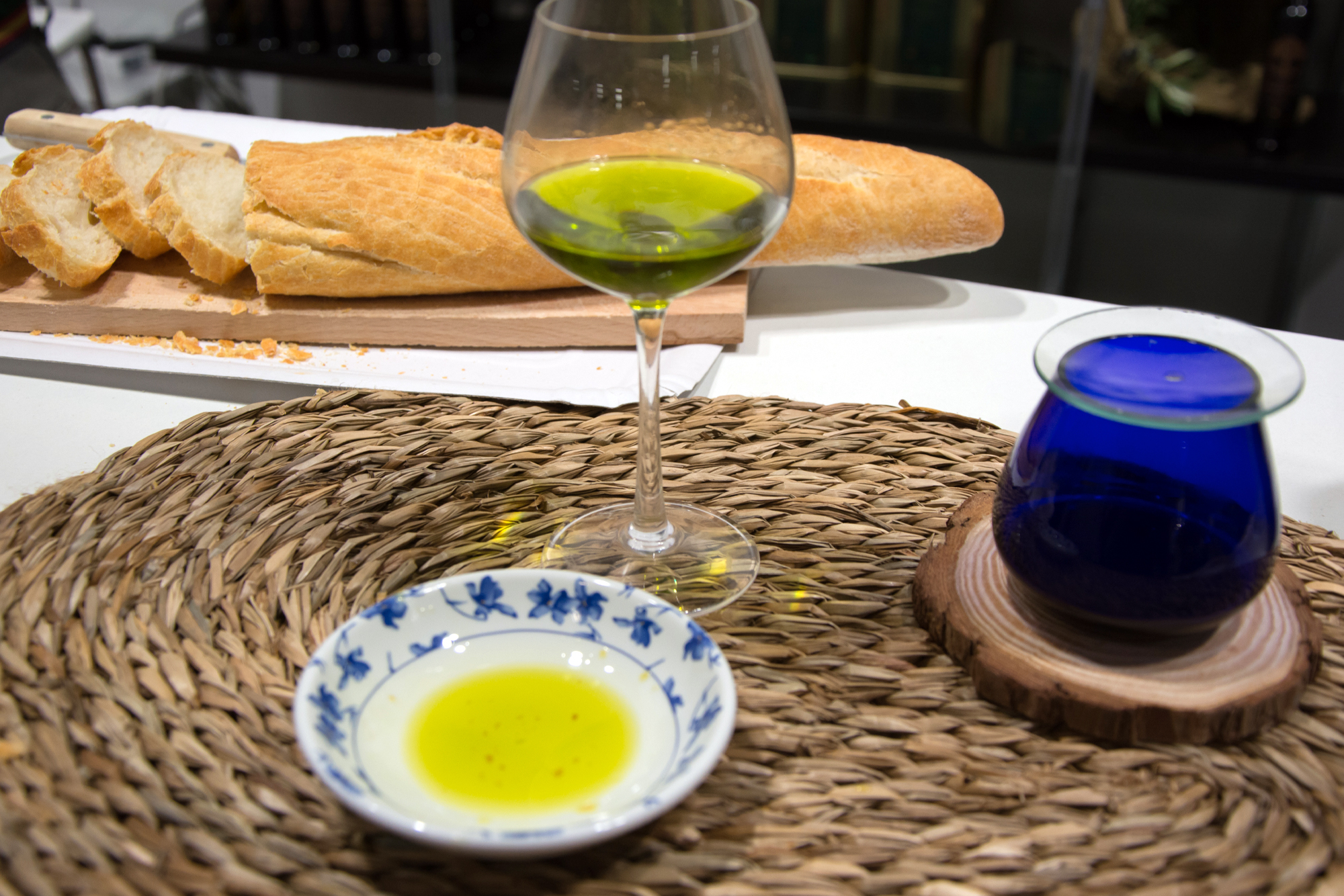
In professional contexts, a dark blue opaque glass is used to focus on the aromas without being influenced by the colour of the oil. At home, a small transparent glass or wine glass is also fine. The important thing is not to be influenced by the colour. - Preparing the oil
Pour a small spoonful of oil and cover the opening with your hand, gently warming it by swirling the liquid. This simple gesture releases the aromas and anticipates the taste experience, transforming the tasting into an almost ‘ceremonial’ moment, just like the Japanese ritual of fine drinks. - Smelling
Bring the glass to your nose and inhale deeply. Fruity aromas, fresh grass, tomato, almond or green banana tell the story and quality of the oil. Rancid, or metallic odours indicate defects. Learning to perceive aromas becomes a game of sensitivity, similar to the appreciation of tea. - Tasting phase
Take a small sip and distribute it between your teeth and cheeks. Inhaling air slightly, the so-called ‘stripping’ technique, amplifies the sensations and allows you to distinguish between bitter, spicy and fruity flavours. The typical tingling sensation in the throat is not a defect, but a sign of quality. - Cleansing the palate
After each tasting, neutralise the flavours with a sip of water or a few slices of apple. This keeps the palate ready for new tastings and helps you to appreciate the differences between different oils, making each tasting a moment of discovery. - Comparing different oils
Tasting several bottles one after the other allows you to appreciate the biodiversity and complexity of European EVOs. Even oils from the same country can offer very different experiences, transforming the tasting into a small journey through Italian territories and traditions.
The +56% increase in exports to Japan is not just a number: it is a sign that a historic and refined market such as Japan is ready to discover and appreciate EVO oil as a quality product with identity, territory and culture.
A project such as Enjoyevoo — consisting of training, tastings and culture — is actively contributing to the emergence of informed, passionate consumers who are able to make informed choices. At the same time, it promotes an idea of EVO oil that goes beyond everyday use to become a sensory, cultural and taste experience.
Ultimately, knowing how to taste oil and recognise a good EVO also means honouring the biodiversity and history of centuries-old territories, transforming each bottle into a small ‘story’ of taste and identity.
To find out more and stay up to date, follow us on Instagram and Facebook.